Don't forget to return to your survey
and get your discount!
How Long Does Cannabis Stay in Your System
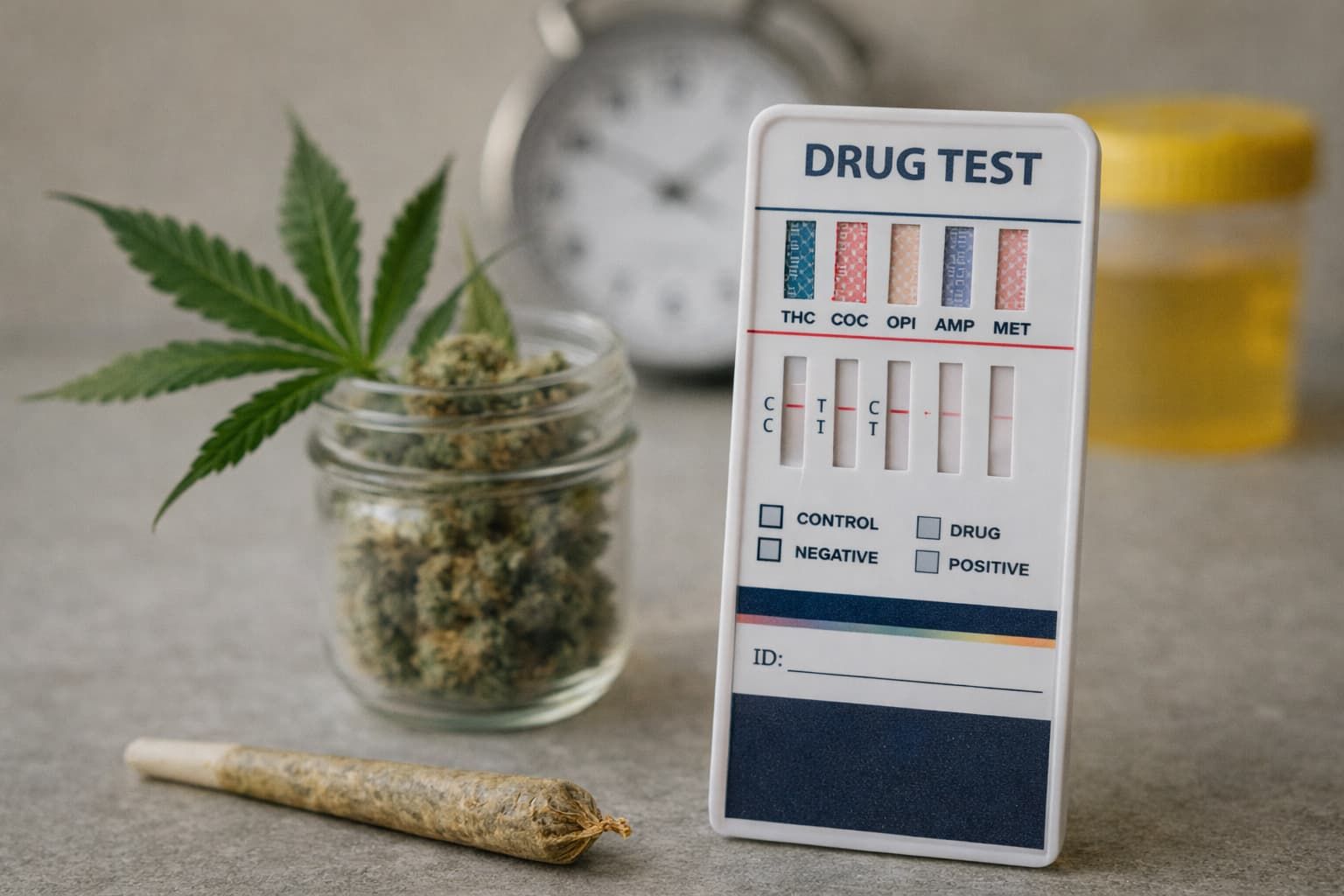
How long does cannabis stay in your system? The answer depends less on cannabis itself and more on how the body processes it.
Cannabis doesn’t exit the body right away. Its metabolites can linger long after the effects fade, which is why detection times vary between individuals.
Understanding these basics helps clarify why some people test negative within days while others may take longer without assuming misuse or impairment.
What Happens to Cannabis in the Body?
THC (tetrahydrocannabinol) is the compound most associated with cannabis’s psychoactive effects. After consumption - whether inhaled or ingested - THC enters the bloodstream and is processed by the body.
The liver breaks THC down into metabolites, including THC-COOH, which is one of the primary compounds many drug tests look for.
THC is also fat-soluble, which means it can be stored in fat tissue and released gradually over time. That’s one of the biggest reasons detection timelines can vary so much between individuals, especially between occasional consumers and more frequent consumers.
READ: How Long To Dry Cannabis
What Affects How Long Cannabis Stays in Your System?
A few major factors shape detection timelines:
Frequency of use
The more frequently someone consumes cannabis, the more likely metabolites can build up over time, which can extend detectability.
Product type and potency
Higher-THC products can produce more metabolites for the body to process. Consumption method also matters: inhaled products and edibles are processed differently.
Body composition and metabolism
Because THC is fat-soluble, body composition can influence how long metabolites remain detectable. Metabolic rate and overall physiology also contribute.
Hydration and general health
Healthy routines matter for overall wellness, but they don’t “flush” THC on command. The body clears metabolites on its own schedule.
Cannabis Detection by Test Type
Different tests look for different things, and they’re used in different contexts:
Urine tests
Urine testing is one of the most common methods because it detects THC metabolites rather than active THC. For heavy, chronic consumers, cannabis exposure may be detectable for approximately 30 days.
Blood tests
Blood testing is generally associated with more recent use because active THC in blood declines sooner than metabolites found in urine. These tests are often used in situations where recent exposure is the focus.
Saliva tests
Saliva testing can indicate more recent exposure and is sometimes used in roadside or workplace settings. It typically reflects shorter-term detection compared with urine or hair testing.
Hair tests
Hair testing is designed to identify longer-term patterns of exposure, not recent effects. In many cases, it can show cannabis exposure for up to 90 days.
Effects vs. Detectability: Why They’re Not the Same
It’s easy to assume that if cannabis shows up on a test, the effects must still be present. In most cases, that’s not true. Cannabis tests are usually not about checking whether someone feels high. They’re looking for inactive THC byproducts, which can stay in the body after the experience has passed.
The noticeable effects of cannabis tend to last a limited time. When cannabis is smoked or vaped, those effects often fade within a few hours. Edibles can last longer, but they still wear off well before cannabis leaves the system completely. After that point, the body continues to process what’s left behind.
What tests detect are leftover metabolites stored in fat cells and released slowly over time. This means someone can feel completely clear-headed and still test positive days or even weeks later, depending on how often they use cannabis and how their body processes it.
Because of this, detection windows are best viewed as a testing timeframe, not a measure of how long cannabis affects someone. Understanding that difference helps clear up confusion and gives a more realistic picture of how cannabis works in the body.
Can You “Detox” Faster?
You’ll see a lot of products marketed as fast detox solutions. The most reliable truth is simpler: time is the main factor. Hydration and balanced habits support general wellness, but there’s no magic shortcut that reliably overrides the body’s natural processing.
If you’re trying to plan responsibly, the best approach is to understand what test type is involved and remember that personal factors can create meaningful variation.
Conclusion
So, how long does cannabis stay in your system? It depends on the individual, the products used, and how often someone consumes cannabis. Urine tests and hair tests can detect cannabis exposure much longer than the felt effects last and many tests are looking for metabolites rather than active THC.
When cannabis is used responsibly and intentionally, understanding the basics of detection can help people make informed choices and avoid confusion around testing.
Frequently Asked Questions
How long does cannabis show in a urine test?
Cannabis can show up in a urine test for a few days in occasional users and much longer in regular users. Urine tests look for THC metabolites, not active THC. Detection time depends largely on how often cannabis is used.
Does vaping affect how long THC is detectable?
Vaping does not significantly change how long THC is detectable compared to smoking. Both methods deliver THC quickly into the bloodstream and are processed in similar ways. Detection time is influenced more by frequency and dosage than by vaping itself.
Do edibles stay in your system longer than smoked cannabis?
Edibles are processed differently by the body and may lead to longer-lasting metabolites. While the effects last longer, detectability can also extend slightly compared to inhaled cannabis. This varies based on dose and individual metabolism.
Does frequency of use affect how long cannabis stays in your system?
Yes, frequency of use plays a major role in how long cannabis stays detectable. Regular use allows THC metabolites to build up in the body over time. Occasional use usually results in shorter detection windows.
What’s the difference in detection between occasional and daily use?
Occasional users may clear cannabis metabolites within days. Daily or heavy users may test positive for weeks due to THC storage in fat cells. The difference comes from accumulation, not ongoing effects.
How is cannabis eliminated from the body?
Cannabis is broken down by the liver into metabolites. These metabolites are slowly released and eliminated through urine and feces. This process happens gradually over time.
What factors influence how long cannabis is detectable?
Detection time is influenced by frequency of use, potency, body fat, metabolism, and method of consumption. Higher THC intake and regular use generally extend detection windows. Individual body chemistry also plays a key role.
Don't forget to return to your survey
and get your discount!
SHARE